


01
Density is not hair strand thickness
A hair system may have fine strands with high density or thick strands with low density. These two characteristics should be evaluated separately.

Musthair Knowledge Center
A natural appearance depends on more than color and base selection. Hair density should match your age, your side and back hair, your hairstyle, and the base construction.
Essential Information
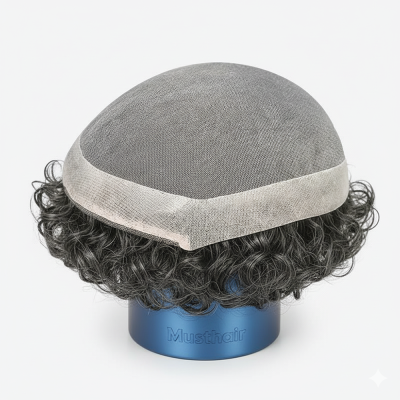
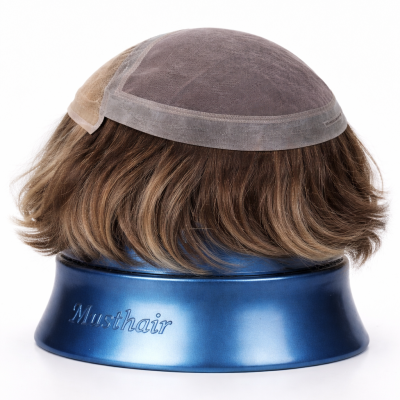
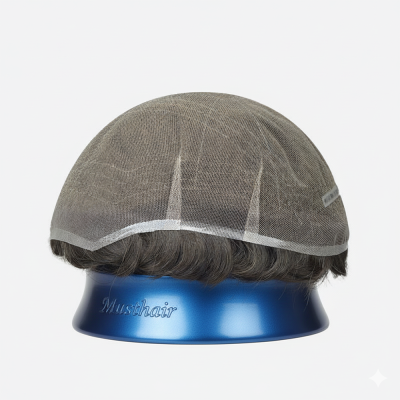
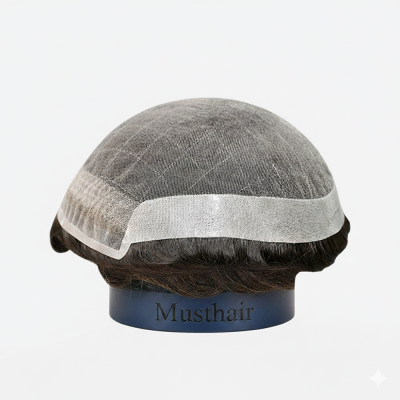
Density refers to how much hair is placed within a specific area of the hair system and how full the hair looks overall. As the percentage increases, the appearance becomes denser and more voluminous.
A hair system may have fine strands with high density or thick strands with low density. These two characteristics should be evaluated separately.
The same percentage may not look identical across different manufacturers. Product photos, hair samples, and matching with your side hair are therefore important.
A natural appearance is achieved when age, side and back hair density, hairline, base type, and haircut are balanced.
Density Levels
The classifications below provide a general starting point. The final appearance may vary depending on strand texture, length, curl pattern, and haircut.
Very light density
Provides a fine, natural distribution that allows more of the scalp to remain visible.
May not provide enough fullness for very long or voluminous styles.
Natural light density
Creates a soft, realistic balance between scalp visibility and fullness.
Looks more natural with graduated density at the front hairline.
Medium density
Provides noticeable but not excessive fullness, with excellent styling flexibility.
May appear too dense with very sparse side hair.
Full density
Creates a fuller, more defined, and youthful appearance. Your side hair should have enough density to support this look.
May affect durability and natural appearance on thin bases.
Very full density
Provides significant volume and coverage. It is not suitable for every age, base, or hairline.
May be denser than necessary for most users who prioritize a natural look.
Quick Comparison
This table compares the general visual character of each range. Hair length, color, curl pattern, strand thickness, and base construction can affect perceived density.
| Feature | 60–70% | 80–90% | 100–110% | 120–130% | 140%+ |
|---|---|---|---|---|---|
| Overall appearance | Very light | Light and natural | Balanced and defined | Full | Very full |
| Scalp visibility | Visible | Slightly visible | Less visible | Limited | Minimal |
| Ease of natural matching | |||||
| Volume and styling | Low | Light | Medium | High | Very high |
| Best suited for | Sparse and mature appearance | Natural everyday wear | Balanced and versatile styling | Voluminous appearance | Dense and long styles |
Density percentages may vary by manufacturer and product. This table is not a product guarantee or a personalized assessment.
Natural Matching
Before considering how dense the top looks, evaluate how well the system blends with your own side and back hair.
Choosing high density when the side hair is very sparse can make the edges of the hair system more noticeable.
Light density can create a more natural transition between the top and sides. The transition areas should be carefully blended during the haircut.
Provides a balanced look between naturalness and coverage. It works well with many short and medium-length styles.
Creates a more defined appearance on top. Strand thickness and volume at the sides should also be considered.
Fuller systems can be supported. Even so, graduated density at the front hairline improves naturalness.
Younger users may carry higher density well, while lighter density often looks more natural with age. Age alone should not determine the choice; the current density of your own hair is more important.
Base and Density Compatibility
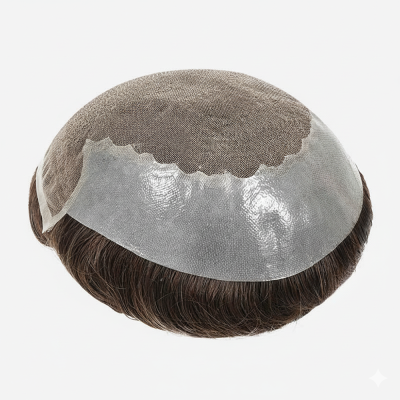
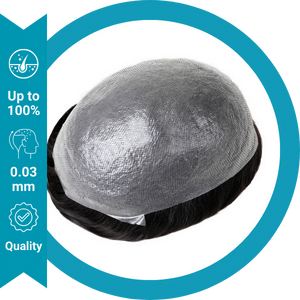
A thinner base may look more natural, but its ability to support very high density and its lifespan may decrease. The ranges below are general guidelines.
Suitable for a natural scalp appearance. It generally provides a more balanced result in the 60–100% range.
Offers a somewhat stronger construction. Depending on the model, it may support approximately 80–120% density.
A very fine and natural mesh construction. It is generally more compatible with 60–100% density.
More durable than Swiss lace. It can generally be used in the 80–120% range.
Its strong mesh construction supports higher density and is generally best suited to the 100–140%+ range.
Depending on the materials used, it can offer balanced options within approximately the 80–130% range.
Quick Selection Guide
Answer four short questions. The result does not replace a professional assessment; it provides a starting point for identifying the right range.
Once all selections are complete, the density range closest to your needs will appear here.
Common Mistakes
This creates a sharp contrast between the top and sides, which can make the edges of the hair system more noticeable.
Adding too much hair to a very thin base can strain the material, make knots more visible, and shorten its lifespan.
A natural hairline usually begins gradually. Lighter density at the front that increases toward the back can create a more realistic result.
Frequently Asked Questions
Answers to the most common questions about hair system density.
Musthair Expert Support
Evaluate your side and back hair, age, hairstyle, and preferred base together to choose a more natural and balanced hair system.
